Friday, 6 October 2023

Kyoto Day 4

Friday was our day in Nara, an ancient capital of Japan that is about 60 km from Kyoto.  It is easily reached by a 45-minute train ride from the central station.  Arriving we then boarded a local bus to take us to Nara Park which is famous for its deer.  Strange you say but these deer are so tame that you can pet them.  They come up to you asking for deer crackers that are sold at most of the local stores. 

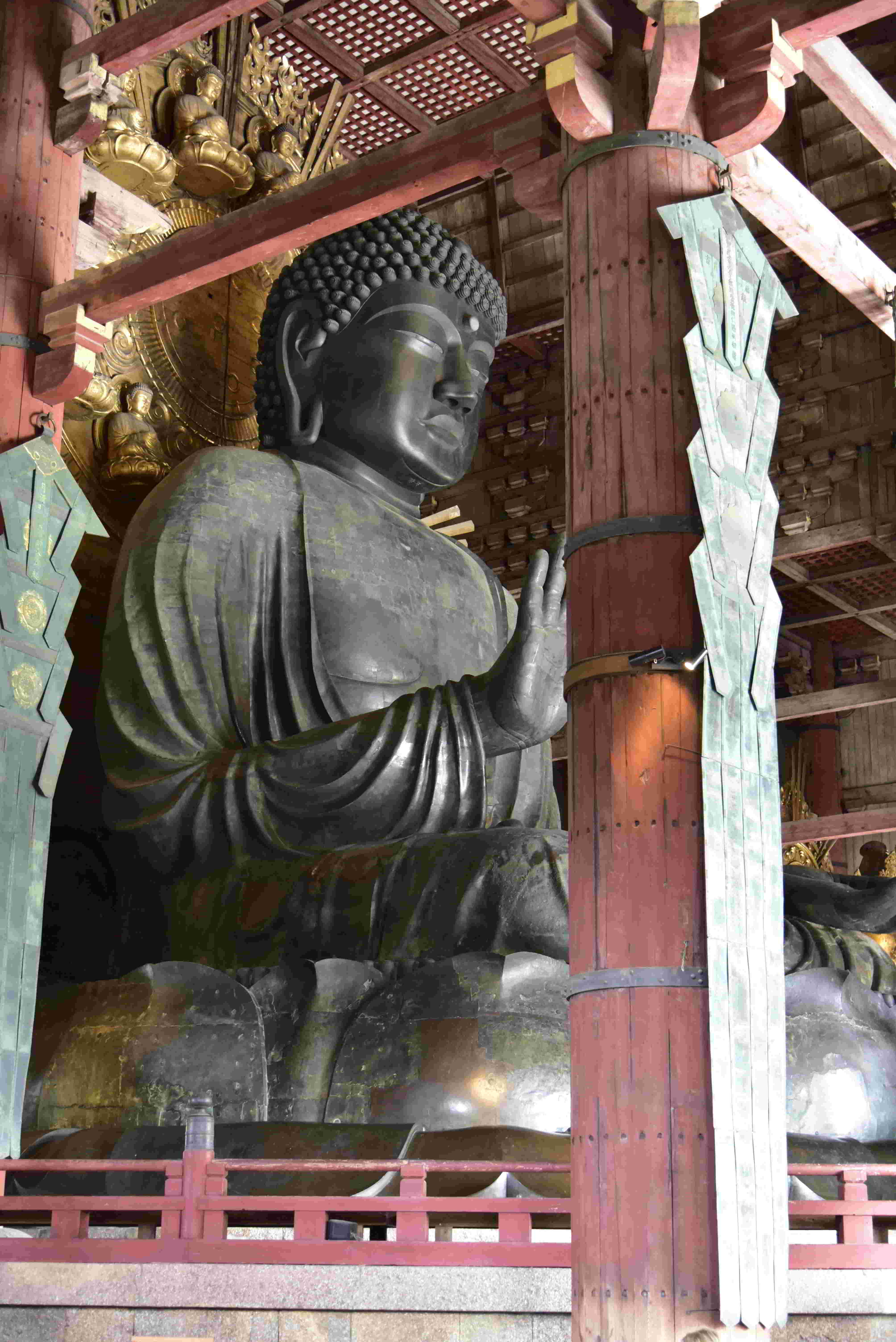
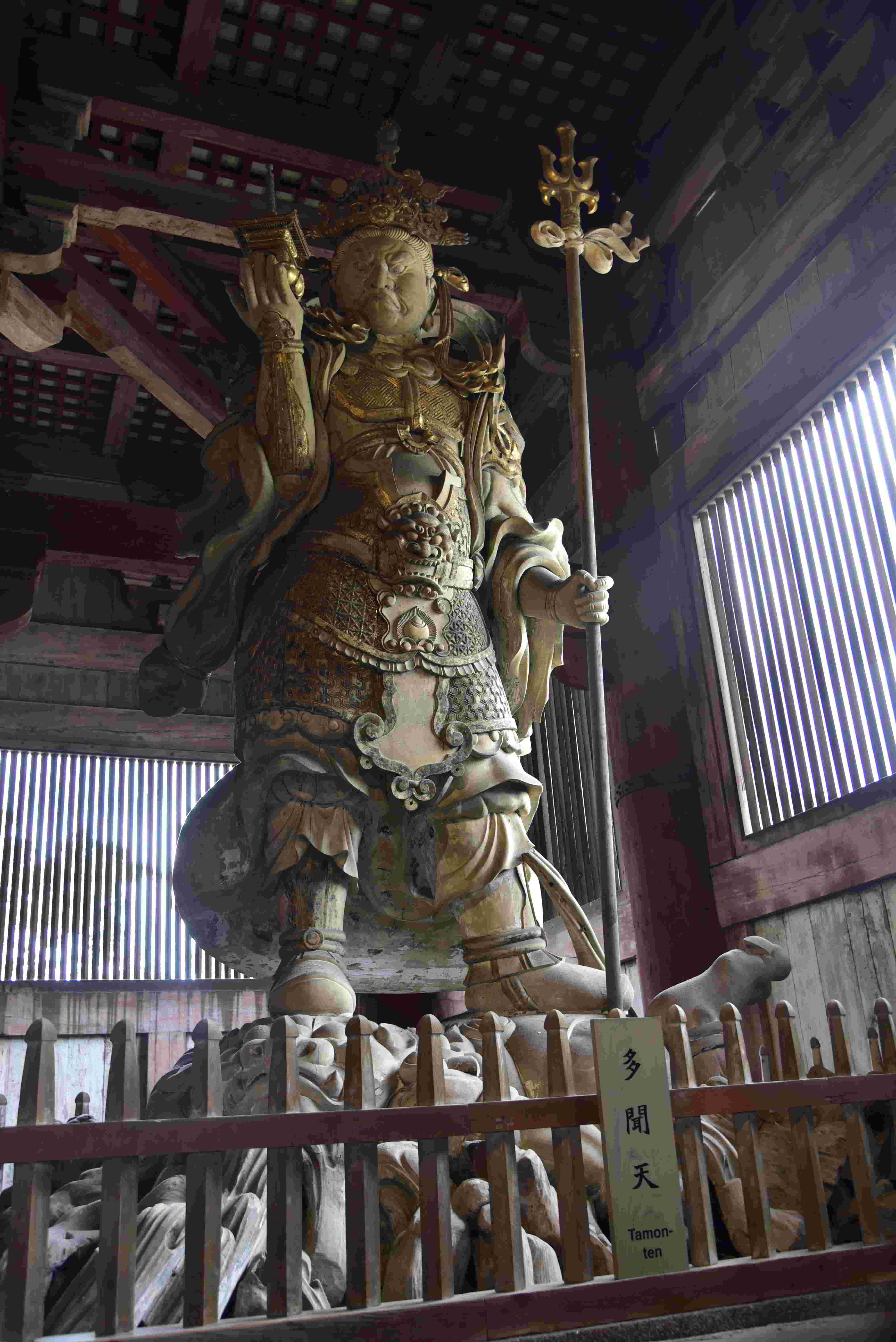
We came here to see the major shrines and we were not disappointed.  The first stop was the Great Buddha.  This statue was built in the mid 700s. The building housing it burned at least twice but has obviously been rebuilt and modified over the years. 

 To say that the statue is huge is an understatement, it is massive.  One finger is about 6 feet long.  It dominates the center of the room with other gods on either side.  


Behind Buddha is a small hole that, if you can crawl through it, will bring you good luck  Neither of us tried.

After seeing Buddha we went to Kasugataisha Shrine which is surrounded by over 200 lanterns  made of brass or stone.  We were there in the daytime so no night pictures of the lanterns but still impressive.  


We decided after all this wandering we were tired so we returned to the train for the trip back to Kyoto.  A great day.


Most of our dining has been in a massive food court under the Kyoto Tower.  The food is inexpensive and really good.  Japanese homes are very small so dining out or takeout are common habits.  Our fellow diners have been both local and international.  Japan is a cosmopolitan country filled with people from all over the world.  As for the Japanese, though many speak English, those who do not are still so willing to answer questions or give assistance, such as how to order at a counter restaurants.


Kyoto Day 3

On Thursday we decided to do some local touring.  Our first stop was the Railroad Station to learn how to get to Nara tomorrow and our final destination on Sunday.  We found an information desk where english was spoken and the clerk was very helpful.   

We also found some old friends.

From the station, we walked 3 km to the Nishiki Market.  This place is beyond comprehension.  To say that it is large is a gross understatement.  There seem to be more stores in this market than exist in the entire city of Sacramento.  You can buy anything from food cooked to order to clothing, shoes, cosmetics and anything else you can think of.


 Also the art is unique.    

After wandering around for a bit we went to the Samurai Museum where Jerry learned how to be a Ninja by throwing a Ninja star.  Lots of fun.

At dusk we decided to go to the Kyoto Tower for some pictures of the city lights coming on.  


 The tower is also reflected in the windows of the Railroad Station across the street.

Beautiful view and we saw a temple near our hotel that we had not yet visited.  Always tomorrow. Here is our hotel.


After dinner, near the Railroad Station, there is a small fountain that is built to entertain.


Wednesday, 4 October 2023

Kyoto

First the answer to the question about the device.  It is a clothes washing machine.  You put the few clothes in one round section for washing and then the other for spinning.  The hotel desk checks this out and you carry it to your room.  As for drying, we hung everything up over the tub.

On Tuesday we took the bullet train from Tokyo to Kyoto, a trip of about two and a half hours.  You hardly knew the train was moving unless you looked out the window.  After checking into our hotel we took a tour of Gion.  This is the entertainment district famous for the Gieshas who trained, lived and worked there. 

In the 1660s Gieshas  were introduced in five neighborhoods to provide entertainment with poetry, dance and drinking games.  They lived in the tea houses  They were not married and spent about five years in training.

Although the hair styles were prescribed, it was not generally their actual hair.They wore wigs.

These signs show the names of girls who lived here.

This wooden house was for Gieshas in-training.

Kasaka-jinga Shrine opened in 656 AD as a shrine to ward off epidemics.


 We walked past a woodworker’s shop who was making lotus flowers for the temple.  The carving was beautiful.


At Yasui-Konpiragu Shrine, dating back to the seventh century, white pieces of paper bore fortunes for worshippers.  Good fortunes were glued onto the rock.  If they drew a bad fortune, they crawled thru this hole and crawled back again. They then hung it on a rack for forgiveness. 

One of our tour mates decided to give it a try.

This red ball hanging outside of a house is for good luck.

The roof of this building held three monkeys, “hear, speak, see no evil.”

This pagoda was burnt in 1408 to stop the fighting between the Buddhist and Shinto sects.

This tree branch is trimmed to grow to support the roof.

 Lanterns hanging in the Yasaka Shrine are placed by businesses to thank the dieties for their success (businesses such as Natural Beauty, the only one written in English)


Tuesday, 3 October 2023

Hakone

For our latest tour we took several trains and buses to get to Hakone, about a 100 km from Tokyo.  There we spent the day in unique adventures.  We started at The Hakone Open-Air Museum.  


Pavillions, gardens, hidden groves, hills, and more landscape designs are filled with sculpture.  We lack the words to describe this museum.  This is the type of museum where children and adults find art a joy and pleasure.  It  ranks among the top of any we have visited.


 While most of the art is in the rolling outdoors, there is a special building dedicated to Picasso.  What impressed us was the label copy that told of the artist’s interests or thoughts.  No photos are allowed.


This pictures is a small morsel of the “banquet” of art that we enjoyed.

After lunch at the museum, we boarded a tram then a cable car to soar up hoping to see Mt. Fuji, but it was too cloudy.  What we did see below were geothermal vents used to supply energy for the area.  


Following the disaster at Fukushima, Japan went on an energy diet closing all of their nuclear plants and started seeking more energy sources.  On the downhill portion of the gondola ride we saw resort areas and hiking trails.

The circle trip ended with a short ride on a replica of a pirate ship across Lake Ashinoko.  We hoped to have another shot as seeing Fuji but the clouds remained.

Our hotel is around the corner from a series of narrow streets rife with small restaurants.  In the evening the area is crowded and noisy and the food is delicious.